Unlocking Standalone DJing: Mixxx on Bare Metal


 embedded raspberryPi behringer klark teknik anima
For years, Mixxx has supported the Raspberry Pi and friends as a popular platform for users looking to DJ without needing a companion laptop. Recently, we have seen more inspiring projects porting Mixxx to embedded hardware. We are proud to see what the community can accomplish with Single Board Computers, which have become affordable since the introduction of the Raspberry Pi. Tech enthusiasts have made incredible ideas real: from flashing custom Linux images to hardware, builders crafting custom 3D-printed controllers, and engineers tweaking real-time kernels to squeeze microsecond audio latency out of low-power CPUs. Every single one of these DIY projects solves critical problems, proving that standard, portable ARM hardware can handle multi-deck performance.
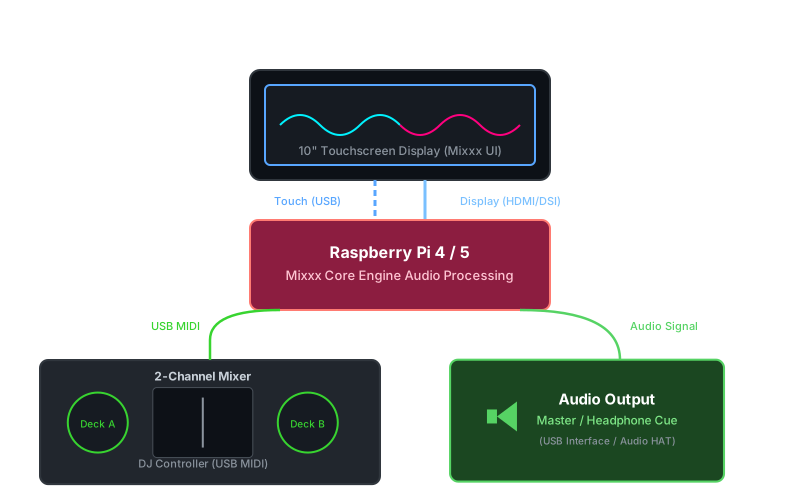
For example, here is a blog post about The smallest possible digital DJ-Setup from Andy Fischer.
We love these projects and we want to support them as best as we can and help them step out of isolation. The Mixxx team and Mixxx e.V. are ready to offer the infrastructure, build systems, testing pipelines, and legal backbone to bring these efforts together. By unifying our efforts, we can break down the silos of individual forks, integrate them into a single upstream codebase, and ensure that anyone building an embedded DJ setup gets a rock-solid, officially supported build right out of the box.
Watching embedded videos will transfer data to YouTube. To protect your privacy, you need to accept YouTubes privacy statement and terms of use first by clicking the button below.
Direct LinkPhil Willoughby (DJ WillerZ) showing Mixxx running on his Denon DJ SC Live 4
These projects are more urgent than ever because the commercial DJ hardware landscape is moving in the wrong direction. Industry giants continue to rely on aggressive vendor lock-in, most recently highlighted by closed formats like AlphaTheta's OneLibrary / Device Library Plus, which rely on encrypted SQLite/SQLCipher databases simply to prevent users from freely moving their own metadata, cue points, and beatgrids across platforms.
Mixxx has never been against commercial hardware or enterprise projects. In fact, we welcome open hardware projects like the recently teased Behringer's Klark Teknik ANIMA, which aims to bring affordable, open-architecture DJ hardware to the market. We firmly believe the ecosystem must be fair, open, and interoperable. A DJ’s track annotations, playlists, and crates belong to the DJ, not locked away inside a manufacturer's encrypted vault. Bringing Mixxx to bare metal guarantees an open alternative where track metadata remains unencrypted, user-accessible, and portable forever.
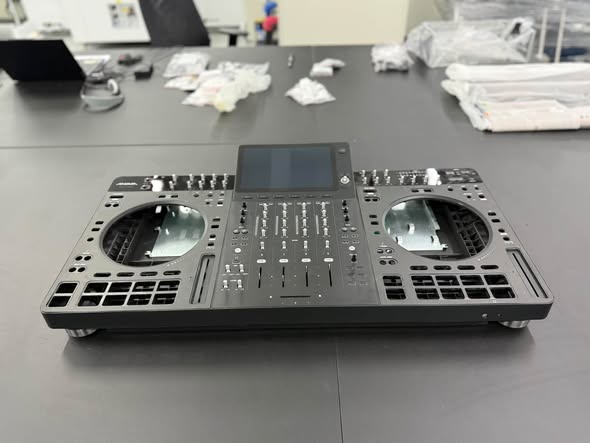
Klark Teknik ANIMA housing prototype
Here is the full announcement on Behringer Facebook.com
To make "Mixxx on Bare Metal" a first-class reality, we believe we must first establish an Embedded Roadmap. We need to conduct a thorough review of everything that has been done across existing Mixxx forks to identify what is ready to be upstreamed into the core project. This will be a massive step forward toward truly open-source DJing, but we need your help to build it. In the era of AI coding, generating raw code has become cheap and easy, so the real challenge lies in careful code review, deep system debugging, and architecting software that fits seamlessly into a clean, maintainable long-term design.
Watching embedded videos will transfer data to YouTube. To protect your privacy, you need to accept YouTubes privacy statement and terms of use first by clicking the button below.
Direct LinkPhil Morse from Digital DJ Tips takling about the Klark Teknik Anima
Let's bring this device to life. We cannot however rely on automated tools alone to build a rock-solid, low-latency ecosystem; we need real human talent. We need your help and are looking for spare-time embedded engineers, software architects, UI designers, code reviewers, and hands-on testers alongside technical writers, marketing specialists, and usability researchers.
We will make it possible even for independent projects to partner officially with Mixxx e.V., which may allow them to use the Mixxx trademark. Does this resonate with you? Then say hello in our Zulip chat and help us build the open-source future of standalone DJing!



Comments